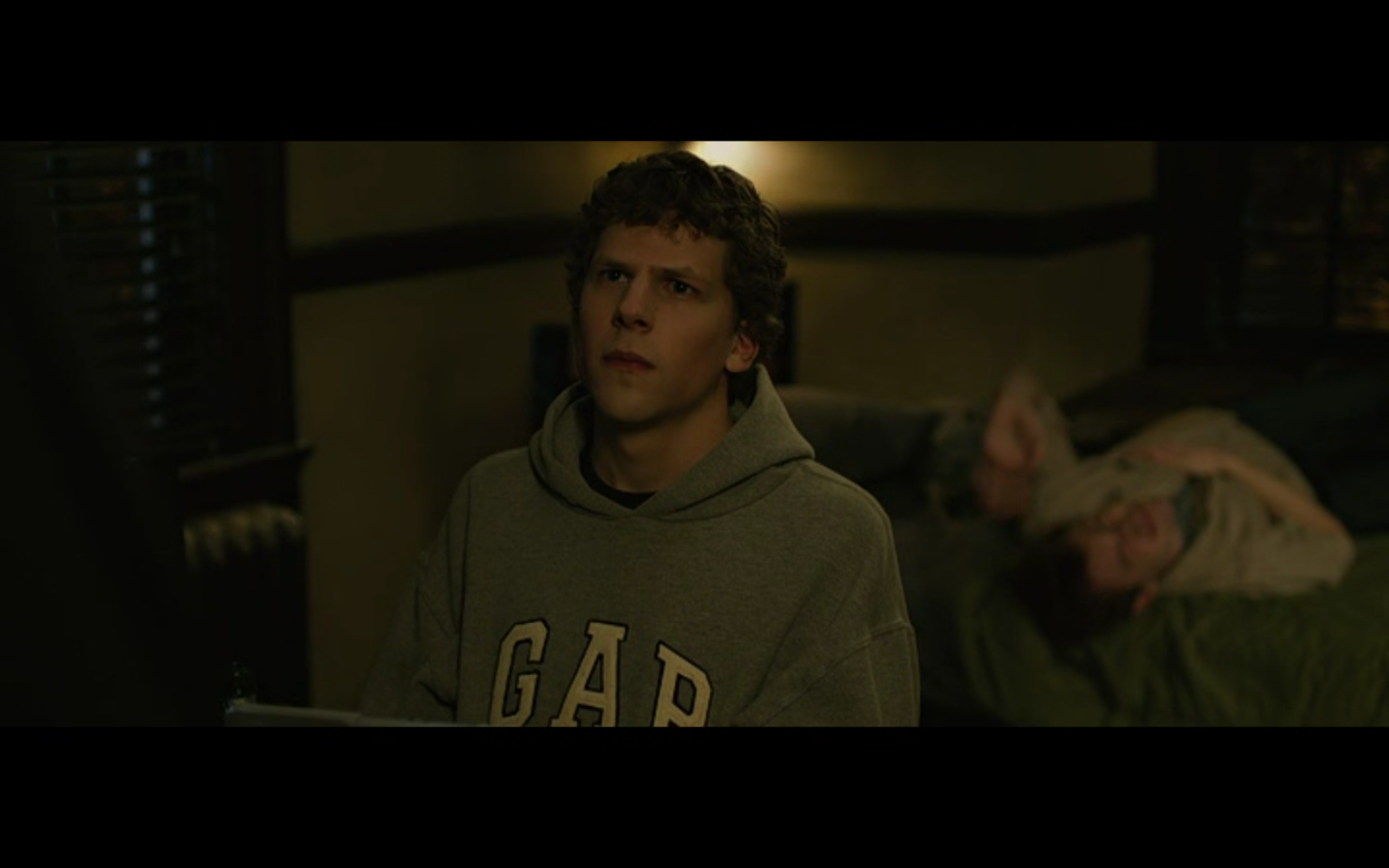
I grew up watching Stanley Kubrick films. The first film that I have seen was Eyes Wide Shut in 1999 when I was 14 years old. I remember a book in our house about the great American directors which included Kubrick as well. Late 90's saw the rise of DVD's and I was lucky enough to find his earlier works. I have around 10 books on Kubrick in my home including the famous Taschen edition as well as Eyes Wide Open by Raphael Frederick which only had only one publication. (I have it!)
We have very few interviews of him but we know one thing for sure, he was a cinephile. BFI published a new post about Kubrick's obsession with cinema as well as his favourite ten films.
It is great to revisit pioneers of cinema especially from the silent era.
There was a time in my life where I had time to watch films as much as I could. Yes those were the days when I was a student and I could just grab a film and study it. In Helsinki, I could see those pictures in cinema with black and white film projection. How lucky was I!
I know there will be time again in my life where I will be able to revisit these films.
Click here to go to the article.
Film History etiketine sahip kayıtlar gösteriliyor. Tüm kayıtları göster
28 Nisan 2015 Salı
22 Şubat 2012 Çarşamba
The Film Director by David Lean
The director is the man responsible for putting the story on the screen. He is, or should be, a story-teller in pictures, and as such is the filter through which the acting and technical talents pass on their way to the celluloid.
Most movie enthusiasts think at heart that they are born directors; it is quite probable that you do, too. I am going to try and make you think again; but first let me confess it is one of the most fascinating jobs in the world.
Have you got imagination? Have you extreme tenacity of purpose? Do you like hard work? Are you the sort of person who will use most known methods to see your ideas carried through to the end? If your answer is yes, read on.
There is no short cut to direction and most of the established directors of today have come up through a succession of studio departments into their present jobs. The director has to give orders, and he must give possible orders. It is no use asking the sound-man or the cameraman to do something which is beyond the limits of sound recording or camera work. The director must also be able to protect himself from technicians who might persuade him that the possible is impossible. He must have authority, and he can only have that authority if he has a general knowledge of his craft. I should mention here that on occasions directors have come straight into the film studios from the stage, but in these cases it will always be found that a cameraman or film-editor has given him the technical knowledge which he would otherwise lack. (It is an interesting sidelight on these stage producers that I can only remember two of them who have had the grace to give their cameraman screen credit alongside their own: NOEL COWARD on In Which We Serve, ORSON WELLES on Citizen Kane. Good company!)
27 Aralık 2011 Salı
Interview with Duygu Sağıroğlu
This is an interview that I did with Duygu Sagiroglu in 29. 05. 2010. He is a filmmaker that I truly admire and he was really kind to give me his time in his office. Here, he talks about John Huston's relationship with his father and how he helped him to relaunch his career.
5 Haziran 2011 Pazar
From Charles Chaplin: My Autobiography

The mechanics of directing were simple in those days. I had only to know my left from my right for entrances and exists. If one exited right from a scene, one came in left in the next scene; if one exited towards the camera, one entered with one's back to the camera in the next scene. These, of course, were primary rules.
But with more experience I found that the placing of a camera was not only pscyhological but articulated a scene; in fact it was the basis of cinematic style. If the camera is a little to near, or too far, it can enhance or spoil an effect. Because economy of movement is important you don't want an actor to walk any unneccesary distance unless there is a special reason, for walking is not dramatic. Therefore placement of camera should effect composition and a graceful entrance for the actor. Placement of camera is cinematic inflection. There is no set rule that a close-up gives more emphasis than a long shot. A close-up is a question of feeling; in some instances a long shot can effect greater emphasis.
p. 152
25 Nisan 2011 Pazartesi
Stan Winston Studios

I remember when I was an undergraduate student at Bilgi University, I was desperately sending my CV to Stan Winston Studios. Of course I never received any reply from them but that's okay. :) I think the first time I sent my CV was in the year 2005.
But my real fascination to Stan Winston really started after having seen Jurassic Park in 1993 when I was eight years old. I was astonished by what I have seen on the big screen and it was just incredible.
When I was in Taik, in Helsinki (maybe the only film school left in the world where they have production design department as well - because today most of the film school don't have a design studio) I was walking around through the studios and I found this book about the art and craft of Stan Winston Studios. I decided to scan the pages related to Dinosaurs and share it in this blog!
Stan Winston passed away couple of years ago but the studio is still very active.
You can check an extract from the book by clicking here.
Terrence Masson, a full time academic faculty and Director of Creative Industries at Northeastern University in Boston came to Sabanci University for Isea2011 Istanbul and he presented his paper Revolution. Excellence. Agility. I was very pleased by the lecture as it also covered his collaboration with Stan Winston. Here's the video. I hope you enjoy it.
28 Şubat 2011 Pazartesi
6 Şubat 2011 Pazar
Words and Movies by Stanley Kubrick
The perfect novel from which to make a movie is, I think, not the novel of action but, on the contrary, the novel which is mainly concerned with the inner life of its characters. I t will give the adaptor an absolute compass bearing, as it were, on what a character is thinking or feeling at any given moment of the story. And from this he can invent action which will be an objective correlative of the book's psychological content, will accurately dramatise this in an implicit, off-the-nose way without resorting to having the actors deliver literal statements of meaning.
I think that for a movie or a play to say anything really truthful about life, it has to do so very obliquely, so as to avoid all pat conclusions and neatly ties-up ideas. The point of view it is conveying has to be completely entwined with a sense of life as it is, and has to be got across through a subtle injection into the audience's consciousness. Ideas which are valid and truthful are so multi-faceted that they don't yield themselves to frontal assault. The ideas have to be discovered by the audience, and their thrill in making the discovery makes those ideas all the more powerful. You use the audience's thrill of surprise and discovery to reinforce your ideas, rather than reinforce them artificially through plot points or phoney drama or phoney stage dynamics put in to power them across.
It's sometimes said that a great novel makes a less promising basis for a film than a novel which is merely good. I don't think that adapting great novels presents any special problems which are not involved in adapting good novels or mediocre novels; except that you will be more heavily criticised if the film is bad, and you may be even if it's good. I think almost any novel can be successfully adapted, provided it is not one whose aesthetic integrity is lost along with its length. For example, the kind of novel in which a great deal and variety of action is absolutely essential to the story, so that it loses much of its point when you subtract heavily from the number of events on their development.
People have asked me how it is possible to make a film out of Lolita when so much of the quality of the book depends on Nabokov's prose style. But to take the prose style as any more that just a part of a great book is simply misunderstanding just what a great book is. Of course, the quality of the writing is one of the elements that make a novel great. But this quality is a result of the quality of the writer's obsession with his subject, with a theme and a concept and a view of life and an understanding of character. Style is what an artist uses to fascinate the beholder in order to convey him his feelings and emotions and thought. These are what have to be dramatised, not the style. The dramatising has to find a style of its own, as it will do if it really grasps the content. And in doing this it will bring out another side of that structure which has gone into the novel. It may or may not be as good as the novel; sometimes it may in certain ways be even better.
4 Şubat 2011 Cuma
15 Kasım 2010 Pazartesi
Notes on Film Noir and Pickpocket
I have decided to share two articles by Paul Schrader. One of them is about Film Noir and the second article is about Bresson's film Pickpocket. I was looking for the first article for a long time but couldn't find it even in his website but recently I found the book, Schrader on Schrader in Taik's Documentary Department and the article was inside! I thought I might scan and share it in my blog since I find it very important. Moreover, it is also interesting how I wrote about Film Noir when I first started this blog. I think we now need this article in this space to sum up the whole idea! I am sure Mr. Schrader will not be happy about that!
I will try to write more about Film Noir since I got to see Samuel Fuller's films in Orion, Helsinki and I would also like to write more on Bresson, more on more I become more attached to him and I believe understanding his cinema and his method is crucial!Well, if you would like to get more pdfs from Schrader's writings in LA Press in the 60's, click here!
For Notes on Film Noir, click here!
For Pickpocket, click here!
9 Temmuz 2010 Cuma
Learning and Teaching
Riding down an elevator I observed two young fellows, both with guitars in identical cases. One fellow was about 21 and in a hog helmet; the other was slightly balding, about 31, with blond hair and beard, and obviously the teacher. I couldn't make out whether he was the teacher of the intricacies of the motorbike they had parked outside, or of the guitar. At any rate, he said to his companion: "I will teach you how to play it."The other boy said, "No. Nuh-uh."The older one said, "Why don't you want me to teach you? You are going to have to learn it. Why don't you let me teach it to you? I'll take fifteen minutes."The younger boy said, "No, look, well, maybe - " And he stalled and stalled and stalled until the elevator got to the ground floor and the door opened.It struck me that maybe those in the upper five to ten percent of their classes are there because they enjoy the exhibition of themselves learning something, while the majority are embarrassed at showing that they have learned something in front of other people. the volunteer in the classroom is probably an exhibitionist. Why is it that so many of the men of brilliant scientific or scholarly achievement were so often last in their classes, so seldom one of the top five?I think the group system of learning is perhaps no longer an acceptable or functioning method.Learning is finding out what you already know.Doing is demonstrating that you know it.Teaching is reminding others that they know it just as well as you.We are all learners, doers, teacher.Your only obligation in any lifetime is to be true to yourself.You teach best what you most need to learn.Live never to be ashamed when something you do or say is published around the world - even if what is published is not true."There is no problem so big that it cannot be run away from."-Snoopy the DogOpen any book and read what's there: you'll find your problems. Hold a problem in your mind. Open a book.Don't turn away from possible futures before you're quite certain you have nothing to learn from them. You're free to choose another (different) future, another past.There is no such thing as a problem without a gift for you in its hands. You seek problems because you need their gifts.You will find a helping hand at the end of your arm.Anyone worth knowing is also a little odd.1971Nicholas Ray - I Was Interrupted - 6, 7.
28 Ocak 2010 Perşembe
Film Noir

I have a great desire to write more about Almodóvar these days, as I loved his last film "Broken Embraces", for me it was a perfect mixture of melodrama, film noir and Pop Art. And I love every one of them. As I understood from his interviews, he is a director who repeatedly sets his stories on his memoir and souvenirs and tries to borrow from everywhere that he adores and his films are the melting pots of his own dreams, fears and interpretations.
There is always one single fact in film noir. The existence of a dangerous woman. For me, today, was "Volver" day and I don't seem to recall a better composition (see above) to describe what film noir is in any of the films that I have seen before. The breasts of the beautiful actress Penelope Cruz seem perfectly the right spot for the audience to look at but on the left side of the composition, we see Penelope's hands washing a knife. But we are not aware of it since we are stuck to these two beautiful breasts and we ignore completely the dangerous side of the character. If you have already seen the film, you will know what comes in the next scene, and will understand what I am talking about.
Douglas Sirk is considered to be the master of melodramas especially the films that he did between the years 52 to 56. Today, very few melodramas are shot but from time to time, what I would call great film directors revisit the genre. Almodóvar is one of them. Todd Haynes also explored the genre in 2002 with "Far From Heaven" heavily influenced by Sirk's "All That Heaven Allows" and of course Sidney Lumet's films can be considered to be a melodrama. I was very surprised when I found out that Lumet considered "Silence of the Lamps" one of the great melodramatic films of all time because he said there is nothing more melodramatic than a man eating human flesh. Now, that's a definition we can not find in any of the books I think!
But what makes Almodóvar's melodramas so unique is his use of vivid colors especially red heavily borrowed from Pop Art.
27 Ocak 2010 Çarşamba
You Are Boring!

Now, this is something that I wouldn't like to receive from my producer or actually from anybody else! It seems to me that Weinstein and Errol Morris had difficulties promoting their films in 1988 "The Thin Blue Line" because Morris was such a bad PR!
And this letter is Weinstein's reaction to Morris!
25 Ocak 2010 Pazartesi
Some Inspirations
I have decided to share some of things that inspired me and I was thinking of using them in my own short film which I intend to shoot in the spring. I was fascinated by lighting, colors, composition or technique.
It is not easy to understand the shot because of the titles but it is a shot of the road seen from inside the car. On the rear window, we see the reflection of Humphrey Bogart driving. It is a close up of his face.
I thought about reproducing this shot in a way that I would shoot the road and the close up of the reflection separately and I would combine them together in the editing software. I think that would create a sort of a different surreal feeling, a combination of different shots coming together to create a linear whole within the composition. And by doing it with very clear, sharp and colorful image by using an HD camera, it will possess an absurd look. But I am not really sure how it is going to end up!
I also like a composition to have layers and hierarchy within it. I believe without those, it doesn't mean anything.

This is a shot from Almodóvar's film, I love the way he plays with color. Red always signals the victim but in this particular shot, it is the telephone. The director, here, probably refers to the character who is going to call, we don't see him, but he is the Fabula. Yet without showing that character, Almodóvar points out that he is the victim. It is very clever.
In his last film, the color red plays a major role in the film. Red presents the hierarchy between the characters and changes all the time by their power, love, lust or misery.
My favorite scene from Broken Embraces can be viewed here.
The way Almodóvar chooses to use elements of pop culture fascinates me. I decided I have to combine my own work with pop references and one of the magazine that is very important for me is "Les Cahiers du Cinéma". That magazine was very important for the foundation of the New Wave French filmmakers and it is still a very important film magazine for world cinema. I don't know how am I going to use it but I just want to combine it with a very self reflexive way!
It is not easy to understand the shot because of the titles but it is a shot of the road seen from inside the car. On the rear window, we see the reflection of Humphrey Bogart driving. It is a close up of his face.I thought about reproducing this shot in a way that I would shoot the road and the close up of the reflection separately and I would combine them together in the editing software. I think that would create a sort of a different surreal feeling, a combination of different shots coming together to create a linear whole within the composition. And by doing it with very clear, sharp and colorful image by using an HD camera, it will possess an absurd look. But I am not really sure how it is going to end up!
I also like a composition to have layers and hierarchy within it. I believe without those, it doesn't mean anything.

This is a shot from Almodóvar's film, I love the way he plays with color. Red always signals the victim but in this particular shot, it is the telephone. The director, here, probably refers to the character who is going to call, we don't see him, but he is the Fabula. Yet without showing that character, Almodóvar points out that he is the victim. It is very clever.
In his last film, the color red plays a major role in the film. Red presents the hierarchy between the characters and changes all the time by their power, love, lust or misery.
My favorite scene from Broken Embraces can be viewed here.
The way Almodóvar chooses to use elements of pop culture fascinates me. I decided I have to combine my own work with pop references and one of the magazine that is very important for me is "Les Cahiers du Cinéma". That magazine was very important for the foundation of the New Wave French filmmakers and it is still a very important film magazine for world cinema. I don't know how am I going to use it but I just want to combine it with a very self reflexive way!
15 Ocak 2010 Cuma
Studying Cinema
David Bordwell defines film criticism and film studies in his article. I still can't decide whether I am on a path to film studies according to what I am doing, reading, watching or am I belonging to a film fan subculture (Fans are also highly evaluative in their talk (“Wasn’t the lightsabre duel cool?”) or someone who wants to produce films.
Yeah, it seems like I am quite lost, no?
Here's the link.
And, hey, I just want to add one more thing. Eric Rohmer recently died and Fatih Ozguven wrote a wonderful article about it. Ozguven was my teacher during my film studies in Bilgi University and he was the only one who recommended me that I have to see Rohmer films as much as I can.
Here's the link.
And what I though about Rohmer was in the 60's and 70's, filmmakers were also film writers and film critiques. Today, it seems to me that very few people who practice filmmaking write about films comparing to the New Wave directors like Truffaut, Godard or Rohmer. Today, film practice and film studies seems quite broke away with each other.
Yeah, it seems like I am quite lost, no?
Here's the link.
And, hey, I just want to add one more thing. Eric Rohmer recently died and Fatih Ozguven wrote a wonderful article about it. Ozguven was my teacher during my film studies in Bilgi University and he was the only one who recommended me that I have to see Rohmer films as much as I can.
Here's the link.
And what I though about Rohmer was in the 60's and 70's, filmmakers were also film writers and film critiques. Today, it seems to me that very few people who practice filmmaking write about films comparing to the New Wave directors like Truffaut, Godard or Rohmer. Today, film practice and film studies seems quite broke away with each other.
14 Ocak 2010 Perşembe
Godard & Allen

I just found a conversation between legendary filmmakers Jean-Luc Godard and Woody Allen. Godard asks Woody his relationship with cinematographers and this is what Woody feels about Gordon Willis's style which I find very close to what I like and what I expect. Let the shots tell the story!
Well, Gordon is a very American style cameraman. He is very comfortable with a very clean American style. He feels most at home when the shots are spacious not concentrating on the individual but concentrating on the whole composition of the room rather than individual. And he feels very much at home with cutting, with a simple not too much movement, simple cutting and telling the story in cuts.The interview is here.
13 Ocak 2010 Çarşamba
10 Ocak 2010 Pazar
Bound


Wachowski Brothers first film is a film noir inspired by the films of Billy Wilder and Alfred Hitchcock. The film was shot in color although their use of color in set design, costumes, make up and props is so monochromatic that makes the film more black and white than any other film that was shot in the 40's and 50's. As can be seen above, the color black and white were the dominant palettes of the film.
An interview from 1998 can be found here.
I hope to write more about this film in the future because I believe the film's use of color, composition, transcendental style makes it so powerful that one has to study to understand the medium. Wachowski's film noir based on a relationship of a lesbian couple led to reevaluate the film noir style in the 90's.
9 Ocak 2010 Cumartesi
11 Years
"The Matrix" was released 11 years ago in 1999. I was 14. I saw the film for the first time in a movie theater in Izmir "Karaca" and the minute I got our of the movie theater I knew I wanted to be a filmmaker.Morpheus believes in Neo. He thinks he is the One and will be their savior. The whole story is based on the idea if he is really the One. The Oracle says that he isn't but maybe in another life. She says someone will die and that Neo has to make a choice. Neo sacrifices himself for Morpheus because he believes he is not the One and Morpheus is more important than him. He saves Morpheus and then is killed by the Agents.
But somehow, he is resurrected. He gets up and stops the bullets. He becomes the "One". If he wasn't killed, he wouldn't be the "One".
Sometimes, all it takes to understand our mission in our lives is a change. A change that will makes us aware what we want and what we desire. Neo had to die to become the "One" without that he was just a normal person.
Sometimes we do mistakes. What I learn from my mistake is actually myself. It reminds me what I love and who I care.
3 Ocak 2010 Pazar
Interview with Stanley Kubrick

I just found an interview with Stanley Kubrick conducted by Jeremy Bernstein in November 27, 1966. Kubrick never liked interviews therefore we have so few with him. This one is quite interesting. In 1966, Kubrick had just finished Dr. Strangelove and was working for his new feature, an adaptation from an Arthur C. Clark novel, A Space Odyssey: 2001.
Near the end of the interview, he discusses director's relationship with editing:
With the exception of a few directors, like David Lean and, well let’s not say who, but with the exception of a few directors, most people have their film edited by film editors as they go along. And then, when the film is done, they look at the film and dictate some notes about it and the film editor tries to do what they say and then maybe they look at it again and they do it again. But basically it’s like trying to, say, redesign a city by driving through it in a car, you know. You can notice a few things and say, you know, “put that traffic light in the middle of the street” or “those buildings over there look kind of shabby” or something, but if you really want to do it right, you must do it yourself, you know, piece by piece. So, I think by now I have enough, sort of, ability to imagine the way a scene will come out so that I can tell without editing the material if I have enough film coverage and, you know, what I can do with it, and then I edit the film with the editor myself when the film is… when I’m all finished.
I would also like to mention a wonderful book about Stanley Kubrick "Eyes Wide Open" written by Frederic Raphael who wrote the screenplay of Eyes Wide Shut. The book is about his collaboration with the director while working on the screenplay in the early 90's. It was just published after the death of Kubrick and the release of the film in 1999. However Kubrick family set against the book because it was published without their permission and the family accused him for not having respect for privacy and writing a memoir on Kubrick with inaccurate information.
After a very long search, a friend of mine found the book for me in New York and gave it to me.
Although I am not sure about the accuracy of information written in the book, I just love this piece of dialog.
S.K.: I don't know. We can talk about that. We'll have to. Do you want to work on it or not?
F.R.: Of course I do. I was afraid it might be science fiction.
S.K.: Don't you like science fiction?
F.R.: I never read it. I never feel remotely interested in people who are going to be alive three centuries after I'm dead, do you?
S.K.: I don't know about people. Situations, yes!
26 Aralık 2009 Cumartesi
The Verdict: A Collaboration of David Mamet and Sidney Lumet

I was once asked during an interview about Eisenstein Montage Theory whether it has changed during the history of cinema or not? I responded without hesitation. No!
Of course, cinema is a form of art that is very much related to technology, and every new invention brings something to the craft, but essentials don't go away. When, in the fifties, American film producers chose to go with a wider and deeper screen called CinemaScope in order to make a difference against television, Andre Bazin called it "fin du montage". Of course, that wasn't true. When we think about dominant cinema, we still tell our stories within the cuts.
Here's what Mamet, the scriptwriter of "The Verdict" says about visual storytelling and montage.
There's another way to make a movie, which is the way that Eisenstein suggested a movie should be made. This method has nothing to do with following the protagonist around but rather is a succession of images juxtaposed so that the contrast between these images moves the story forward in the mind of the audience. This is a very succinct rendition of Eisenstein's theory of montage; it is also the first thing I know about film directing, virtually the only thing I know about film directing.
You always want to tell the story in cuts. Which is to say, through a juxtaposition of images that are basically uninflected image. A shot of a teacup. A shot of a spoon. A shot of a fork. A shot of a door. Let the cut tell the story. Because otherwise you have not got dramatic action, you have narration. If you slip into narration, you are saying "you'll never guess why what I just told you is important to the story." It's important that the audience should guess why it is important to the story. It is important simply to tell the story. Let the audience be surprised.
The movie, finally, is much closer than the play to simple storytelling. If you listen to the way people tell stories, you will hear that they tell them cinematically. They jump from one thing to the next, and the story is moved along by the juxtaposition of images - which is to say, by the cut.
People say, "I'm standing on the corner. It's a foggy day. A bunch of people are running around crazy. Might have been the full moon. All of a sudden, a car comes up and the guy next to me says..."
If you think about it, that's a shot list: (1) a guy standing on the corner; (2) shot of a fog; (3) a full moon shining above; (4) a man says, "I think people get wacky this time of year"; (5) a car approaching.
This is good filmmaking, to juxtapose images. Now you are following the story. What, you wonder, is going to happen next?
In that case, my shot list would be as following:
1. I leave the glass with the liquid in it in my room.
2. I have lunch in the restaurant.
3. I come back to my room.
4. A close up of the glass. Melted.
5. The expression of my face.
6. I enter in the studio, he is painting.
Well, I think that looks premising. But it can be better.
Now what Mamet argues here is interesting:
The truth is, you never have to establish the character. In the first place, there is no such thing as character other than the habitual action, as Mr. Aristotle told us two thousands years ago. It just doesn't exits...Now, after having red this, I will try to make a shot list of the very first scene of "The Verdict".
...As long as the protagonist wants something, the audience will want something. As long as the protagonist is clearly going out and attempting to get that something, the audience will wonder whether or not he is going to succeed...
1. A working class funeral. There are about thirty people.
2. A man (Funeral Director) with a black suit fills the screen.
3. Second man (Galvin) puts discreetly folded ten dollar into director's pocket.
4. They all walk to the funeral parlor.
5. Widow is crying.
6. These two men approaches her.
7. Funeral Director: "Mrs. Dee, This is Joe Galvin, a very good friends of ours and a very fine attorney."
8. Widow nods.
9. Galvin: "I knew him vaguely through the Lodge. He was a wonderful man. It is a crime what happened to him. A crime. If there is anything I could do to help..."
10. Galvin removes his business card from his pocket and hands it to her as he was giving her money. (i.e., "Take it, I want you to have it...")
11. She takes the card.
Beat
Kaydol:
Kayıtlar (Atom)